Phu Chi Fa: plan the final walk before the dawn start
The last approach matters more than the hotel’s province
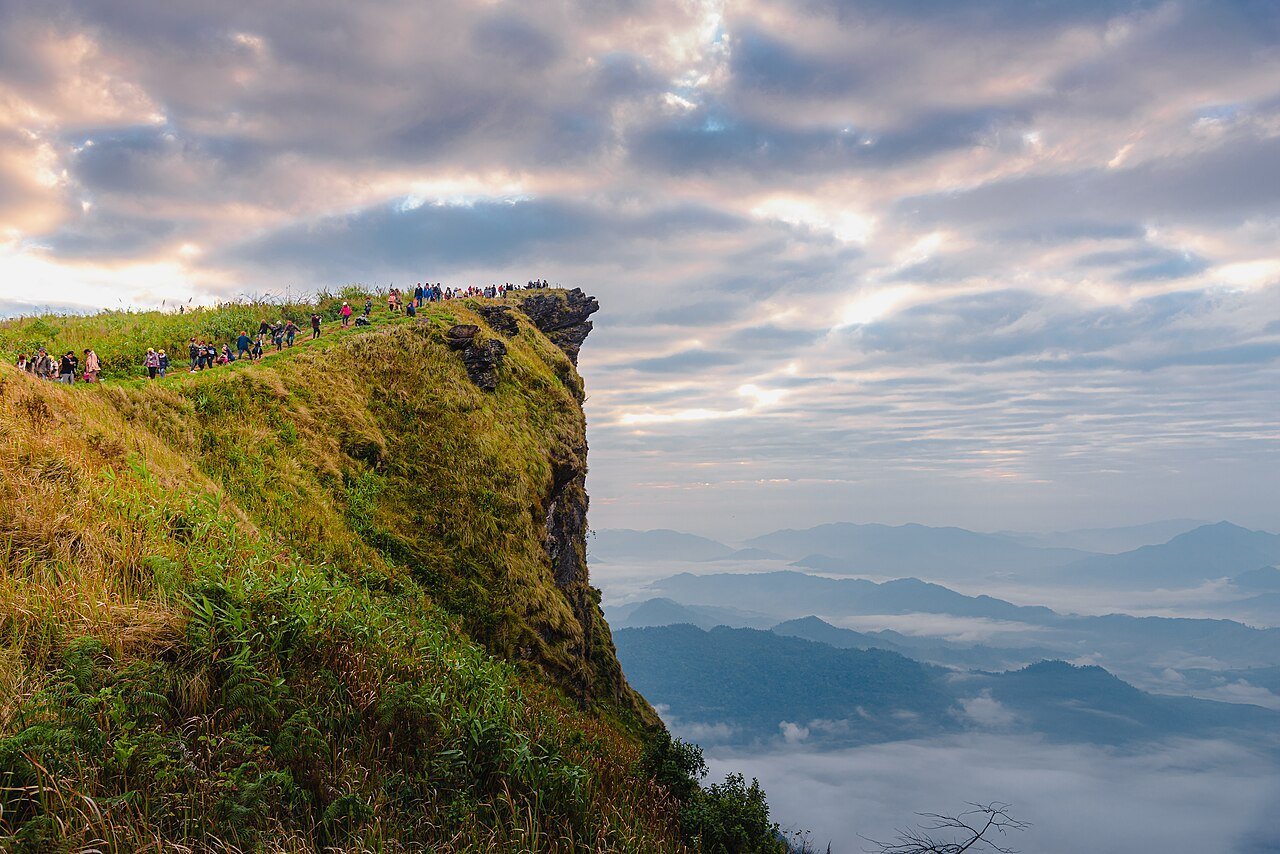
Phu Chi Fa is a cliff-top viewpoint in the Doi Pha Mon range on the Thai–Lao border. Its distinctive pointed profile and outlook over the eastern valleys are the reasons to come. The useful booking question is where you will begin the final walk, rather than whether a hotel is somewhere in Chiang Rai province.
The government tourism directory places the main attraction in Tap Tao subdistrict, Thoeng district. A regional directory gives the park contact at Ban Rom Fa Thai. Use the named viewpoint and agreed drop-off when organising transport. A journey to a village, a park office and the start of the final footpath may have different endpoints; none should silently replace the other in a transfer arrangement.
A current visit report has a limited meaning
The Department of National Parks reported visitors at the summit on 24 October 2026 in news published the following day. That provides recent evidence of tourist activity. It does not guarantee that conditions, visibility or every access route will remain unchanged for a later visit.
The same department still describes Phu Chi Fa as a national park in preparation. Visitors may also encounter older references to a forest park. These labels do not change the practical need to follow the local management’s directions. Arrange access with the park responsible for Phu Chi Fa rather than assuming that a booking or rule for another Chiang Rai mountain applies here.
Treat the cliff as a viewpoint, not an obstacle to conquer
The tourism descriptions identify an open grassy upper area and steep cliffs. This is not a place where reaching the furthest edge improves the visit. Keep the group on the permitted approach, allow room for other walkers and accept the stopping point set by staff or barriers. A clear photograph of the ridge can be taken without making an exposed edge the goal.
For a dawn visit, a light that leaves your hands free and footwear suited to an uneven path are sensible preparation choices. They do not turn an unfamiliar route into a suitable walk for everyone. If anyone in the group needs a firm level surface or assistance, establish the actual path and drop-off arrangement beforehand. The directory’s broad visitor categories are not an accessibility audit.
No fixed walking duration is promised here. Published distances can use different starting points, and a transfer may stop short of the place shown in an online description. Ask your accommodation or driver to identify the actual start, where the vehicle waits and how you will recognise it after the walk. That information is more useful than a single optimistic number of minutes.

Make the dawn plan conditional on access
The Chiang Rai tourism directory publishes 04:30–18:00 for the viewpoint. Treat this as a reference to reconfirm with the park, not permission to enter a closed route before staff allow access. The English national tourism listing displays a conflicting overnight time range, which is not used here as a reliable opening schedule.
Do not select a departure time by copying another visitor’s sunrise photograph. Sunrise changes through the year, while cloud, rain and local instructions can alter the visit itself. Decide the departure with a provider who knows your exact base and the route being used. If the ridge cannot be approached as planned, a later visit or a different day is a reasonable outcome; a paid room does not guarantee a dawn ascent.
Choose one morning target on the border ridge
Phu Chi Fa and Doi Pha Tang belong to the same broader eastern Chiang Rai mountain journey, but they are separate viewpoints. The provincial directory presents them as distinct stops in its regional itinerary. It is more useful to give each its own visit than to promise the same sunrise at both.
A stay around the Phu Chi Fa approach is the geographical choice for an early start here. Thoeng or Chiang Rai town may work as transport and service bases, but they require an onward road journey. They should not be described as summit-side accommodation. If continuing to Pha Tang, agree the next transfer and overnight location rather than assuming your first driver or room booking includes the move.
What to settle before leaving the base
The regional directory lists park contact 084 807 9848, alongside a visitor centre, parking and toilets. Published facilities are useful planning leads, but do not establish opening at the hour you arrive. Ask where to report, which approach is available and whether any vehicle arrangements apply that day.
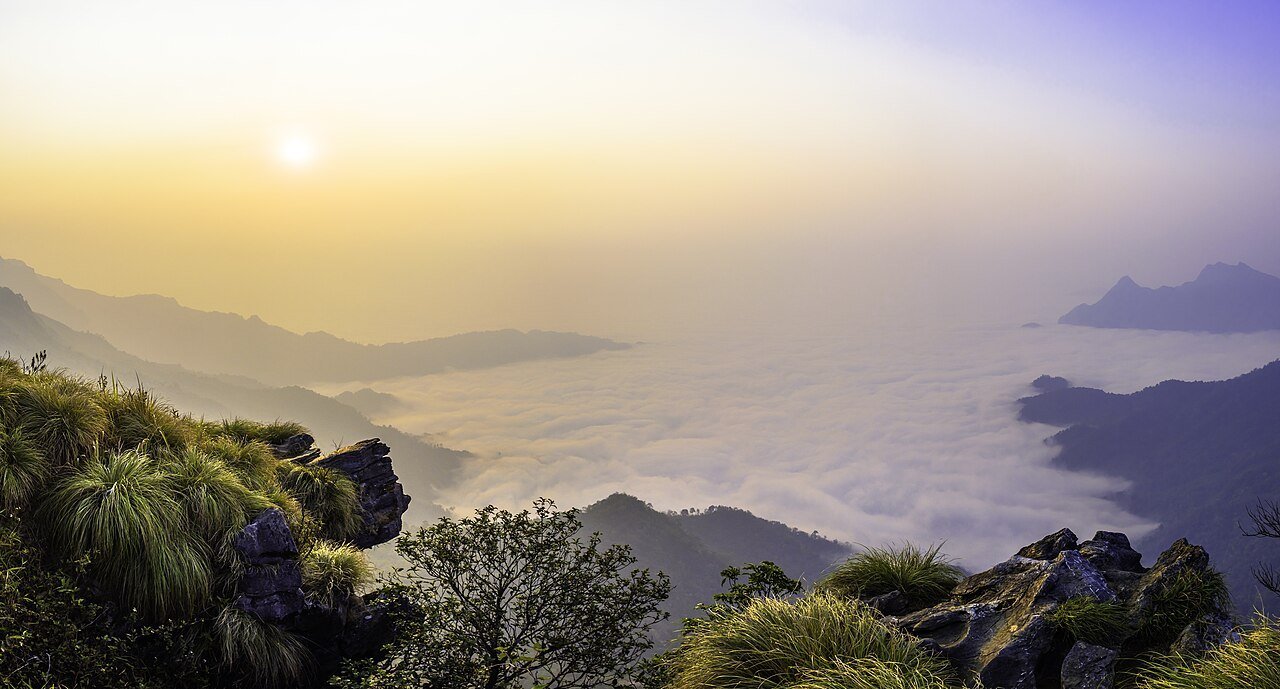
The attraction is known for sunrise and low cloud in the valleys, but recent photographs are evidence of one morning’s conditions. They are not a forecast. The stronger plan is a confirmed approach, a suitable walk and a clear return arrangement, leaving the weather to determine how much of the landscape is visible.