Doi Phu Kha: plan the road before the mountain stops

Doi Phu Kha is best approached as a mountain-road visit with selected stops, rather than one summit that every traveller must climb. Highway 1256 links the park landscape with Pua and Bo Kluea, but a scenic-road description is not a current road-clearance notice. After flood damage reported in August 2026, confirm the intended approach and return route before committing to a through journey.
Pua and Bo Kluea frame the road choice
The Department of Highways' route description places the scenic 'Sky Road' on Highway 1256 heading from Pua towards Bo Kluea. From the Nan side it describes Highway 101 towards Pua, then 1256 through the Doi Phu Kha area, with the wider journey continuing towards Bo Kluea and Highway 1081. These road numbers establish the general orientation, not a timed driving itinerary.
Choose whether the day returns to the same side or continues to a different overnight base. A circular line on a map can conceal several separate mountain-road commitments. Pua and Bo Kluea are different choices for arranging a driver and accommodation; the phrase 'Nan hotel' does not tell you which side of the park it serves.
The government description dates from 2023. Its account of prepared signs and visitor facilities should not be read as a guarantee that every section remains in that condition. Use the established road layout to discuss the plan, then obtain current advice about the specific approach.
The 2026 flood report needs a follow-up
DNP's 20 August 2026 report says heavy rain led to a bridge being washed away at a crossing on Highway 1256 on the Pua approach. It describes the park's Lan Du Duean area being prepared to shelter affected people. This was a significant access disruption, not simply an unattractive-weather forecast.
That August report does not prove the road is still impassable, and it also does not establish a later reopening. Confirm the road status with the park or highway authority for your visit, including whether a return on the same road is possible. This guide has no verified later clearance notice to replace that caution.
A room reservation in Pua or Bo Kluea does not confirm the mountain-road crossing. Where access remains uncertain, choose a base with a worthwhile local stay and leave the crossing conditional instead of promising a complete traverse.
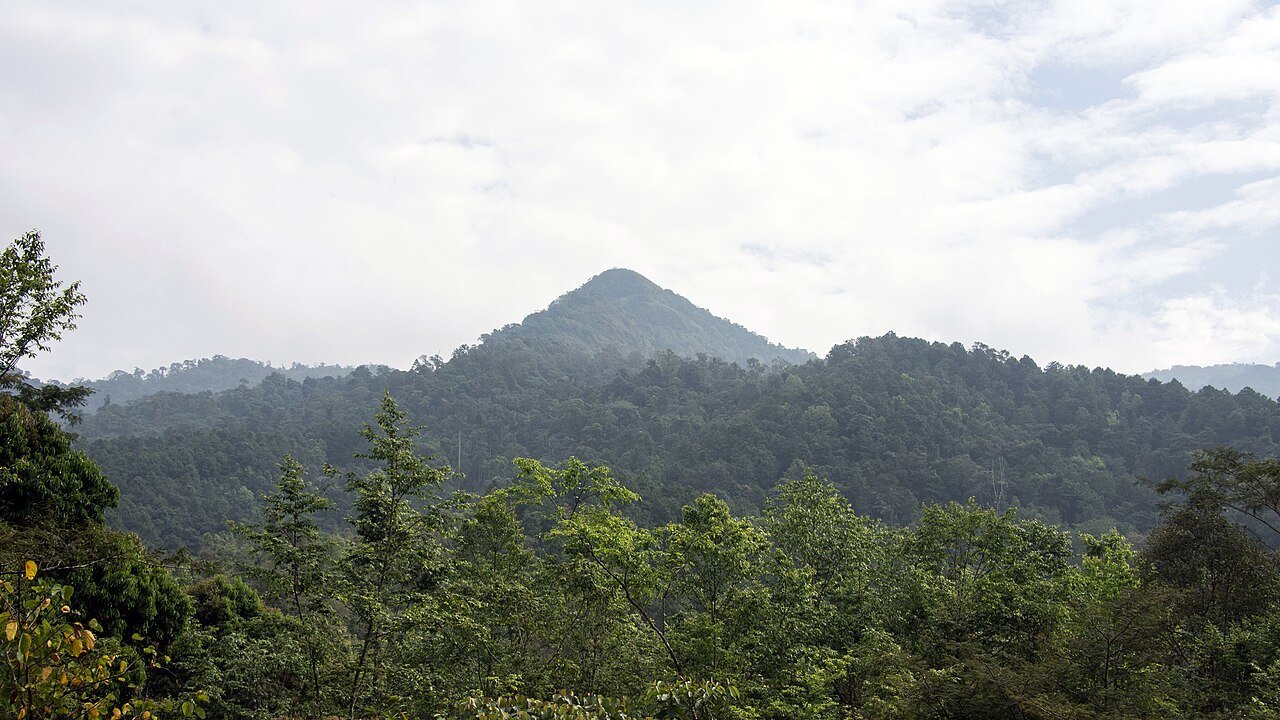

Close forest detail can matter more than a summit
The park covers mountainous headwater country in Nan. DNP's description lists several forest types, rare plants, waterfalls and caves; these are spread across a large protected area, not a cluster beside one parking space. Select the particular visitor stop you want instead of treating the park's entire attraction list as a single day's circuit.
Chomphu Phu Kha is one of the park's distinctive botanical attractions. The Ministry of Tourism describes its flowering period as around February to March. That seasonal interest does not mean flowers will be present in October, and an old statement that flowers are 'now blooming' should not be carried forward as a current display.
A visit outside the flowering period can focus on the forest setting and mountain landscape. Stay within the visitor areas and routes that staff confirm. The presence of a cave, waterfall or named peak in a park inventory is not permission to approach it independently or evidence that its access is suitable for every group.
Do not confuse the road visit with Doi Phu Wae
The park's published list includes Doi Phu Wae among its more demanding mountain destinations. That is a separate objective from seeing Doi Phu Kha's road viewpoints. A drive through the park does not include an automatic ascent, and a hotel promising 'mountain activities' does not establish the necessary local arrangement.
Ask about the precise walk, registration and staff or guide requirements if that is the purpose of the trip. This guide does not supply an unverified trek distance, a walking time or a claim that a long route is currently open. For someone wanting a lighter visit, selected confirmed roadside or headquarters-area stops are a different and more realistic plan.
Camping is another separate choice. Establish the particular campsite, booking and facilities rather than assume the emergency-shelter role described in August is a current tourist-service notice. An attractive photograph of tents provides no evidence of an available pitch, meal service or transport.
Use the base to simplify the day
For a Pua-side approach, a stay in Pua can be examined as a staging base; for an onward Bo Kluea journey, compare accommodation on that side instead. Nan city suits a broader provincial itinerary but should not be described as at the park gate. Property location and the planned road matter more than the province label.
A practical editorial plan is one confirmed approach, a small number of named stops and a return or onward arrangement agreed before departure. It deliberately leaves out invented driving times and the assumption that mist will appear on demand. The landscape is the reason to go, while current road advice determines how much of it the trip can responsibly include.