Doi Pha Hom Pok: the campsite and the summit are separate
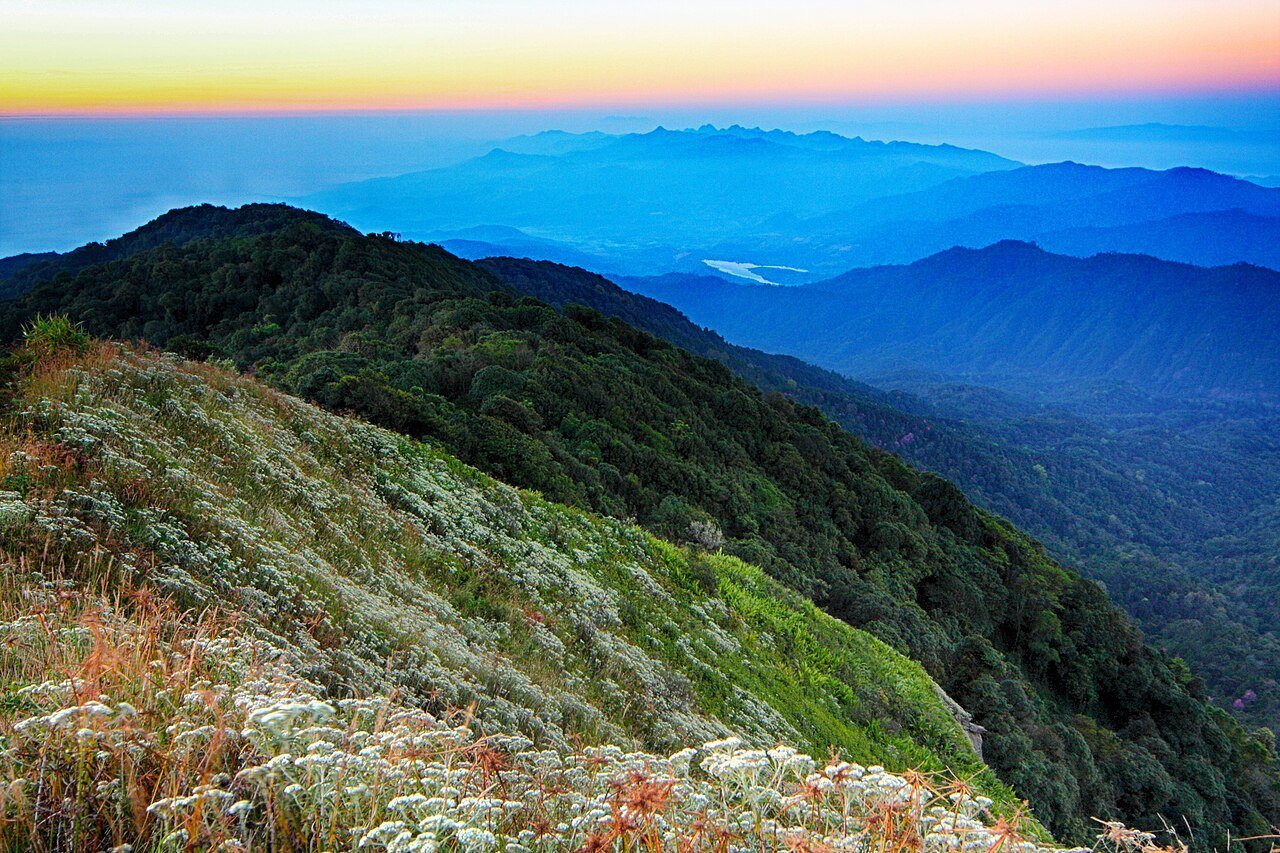
Doi Pha Hom Pok is a camping-and-walking decision, not a drive to a summit sign. The upper campsite at Kiu Lom is the staging point; the peak is reached on foot. Before choosing a sunrise departure, settle access to that campsite, permission and the walk itself with the national park. Fang town, the hot-spring headquarters and Kiu Lom are not interchangeable destinations for a transfer or an overnight booking.
A high peak with a real final walk
At 2,285 metres, Doi Pha Hom Pok is described by the Department of National Parks as Thailand's second-highest mountain. It belongs to the northern Chiang Mai mountain landscape around Fang, Mae Ai and Chai Prakan. That is a different part of the province from Chiang Mai city; the province name alone is not a useful measure of proximity.
DASTA's community-tourism information describes the final walk from the campsite to the peak as approximately 3.5 kilometres. Its suggested walking time is not a guaranteed pace for your group, and the distance should not be mistaken for the whole return outing. Discuss the return, any guide requirement and departure arrangements with the park rather than plan solely around a sunrise time.
The summit's open, rocky setting is part of its appeal. DASTA describes shallow soils over granite and strong wind. This is not the same experience as looking at mountains from a sheltered roadside garden. If the exposed section is unsuitable for your group or conditions, the plan needs an alternative that does not depend on completing the summit.
Kiu Lom is where camping belongs
Chiang Mai Provincial Administrative Organisation's April 2026 guidance presents the summit trip as at least two days and one night. It identifies Kiu Lom as the camping area and says camping on the peak is not permitted because of the steep terrain. That distinction matters when a photograph or tour description loosely promises a night 'on the summit'.
The same provincial guidance says campers can use park tents or bring their own, with site charges, and describes toilets and bathing facilities. It also says there is no food shop at the upper campsite, so food and drinking water must be planned before going up. Treat equipment and facility availability as arrangements to confirm, not as a reason to arrive without supplies.
A reserved tent is not necessarily a complete expedition service. Ask which items are included and which party is responsible for getting them to Kiu Lom. This is particularly relevant if you are staying in a hotel in Fang before the ascent: leaving a hotel room does not establish a transfer, a campsite allocation or a park guide.


Read the upper-road instructions carefully
The park's reservation information distinguishes bungalows at the Fang Hot Springs headquarters from camping on the upper mountain. Its older instructions specify pickup vehicles for the rough upper road and exclude sedans, vans and buses. They also give an afternoon ascent cut-off. Those instructions are useful warnings about the nature of the access, but the page carries a 2021 edit date; confirm the current vehicle and arrival rules directly.
A published old transport price should not become a current quote. Obtain the actual charge, passenger arrangement and return collection for your date. Do not assume that a normal road car, a hotel transfer or a vehicle arriving at the headquarters will be allowed to continue to the campsite.
The 19 October 2026 DNP announcement describes preparations for late-year visitors at the campsite, parking area and nature trails. It supports planning a visit in this season, but it is not a blanket guarantee of road or trail availability on every subsequent day. Weather, local instructions and the particular activity still determine access.
The lower park is a different choice
The park also includes Fang Hot Springs and other lower attractions. These can suit someone who wants to visit the area without making the upper camping commitment. A bungalow labelled for the hot-spring zone should therefore be judged as a lower-park stay, not as summit accommodation.
Doi Pha Hom Pok's forests support birds and butterflies, and the provincial guide highlights seasonal bird interest. Wildlife presence is not a promise of a sighting. A patient nature visit can be worthwhile without trying to turn the summit walk into a checklist of species or adding unconfirmed side trails.
Build the overnight around the park arrangement
Fang is a practical area to examine for a hotel before or after the upper trip because it serves the park's lower approach. Check the particular property's location and transport arrangement. A hotel bed in town can give the group a place to organise the journey, but it does not replace the night specified at Kiu Lom for an overnight mountain plan.
The park's current seasonal message asks visitors to prepare physically, avoid single-use plastic and respect quiet hours. For this destination those instructions belong to the actual camping experience, rather than an ornamental responsible-travel slogan. Leave room in the plan to follow staff directions and to change the ascent when it is not suitable.