Doi Mae Salong: plan a tea-ridge day beyond the town stop
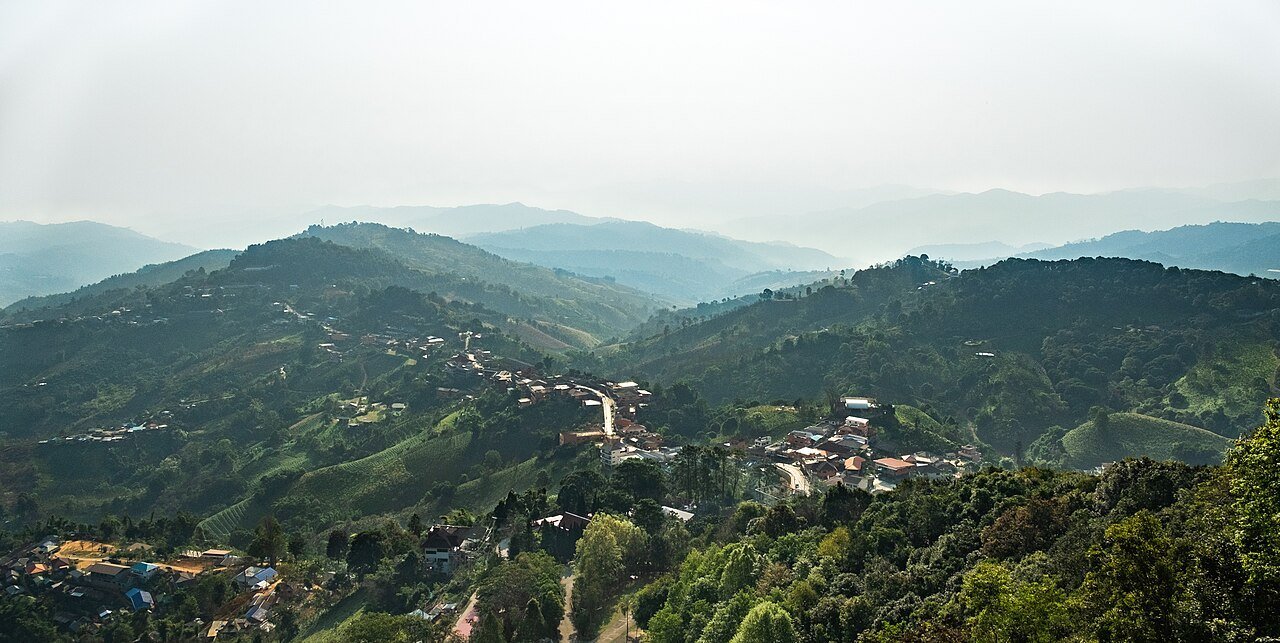
A mountain area with several different stops
Doi Mae Salong is a mountain-and-community visit rather than a single summit walk. Santikhiri village, tea-growing slopes and the hilltop religious site provide different reasons to stop. Treating them as one attraction with one opening time can hide the most useful planning detail: how the group will move between them.
This guide concentrates on the ridge landscape and a tea-focused outing. It does not replace a detailed walk through Santikhiri’s streets or attempt a complete account of the community’s history. Start with the experience you want most—tea cultivation, an elevated view or a combination—and let that determine the stops, rather than collecting every place carrying the Mae Salong name.
Use the tea landscape as the centre of the day
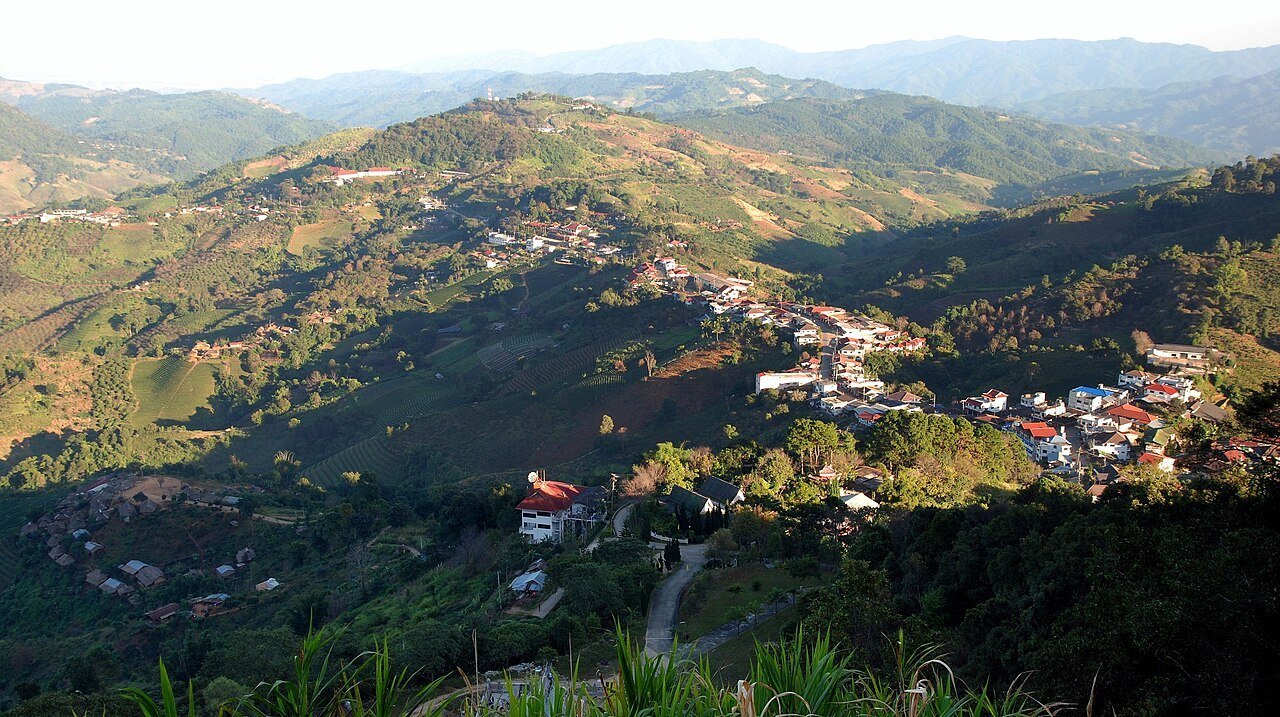
DASTA’s community-tourism description identifies 101 Tea Plantation as a place to see terraced tea cultivation and learn about tea through demonstrations and tasting. The provincial tourism directory also places it in a day itinerary with Mae Salong and Wat Santikhiri. This is a useful combination because it connects the cultivated hills with a view over the settlement.
A plantation is also a working place. Ask which areas visitors may enter and whether a tasting or production demonstration is actually available when you arrive. A published description of those activities does not establish a daily timetable or a free tour. Remain on the visitor paths and do not enter planted rows simply because a photograph shows someone standing among the bushes.
DASTA separately mentions Wang Put Tan tea plantation and its recognisable large teapot feature. It is another named stop, not another entrance to 101. A driver’s plan should identify the chosen plantation. If tea is the main interest, time spent at one place that can explain its product is more useful than rushing through several shop fronts under the assumption that all offer the same visit.
Separate the temple approach from a trekking plan
The Phra Borommathat Chedi Srinagarindra Stit Maha Santi Khiri is the elevated religious landmark described by DASTA, which notes vehicle access to its vicinity. That makes it a different proposition from a mountain requiring a booked trekking permit. It does not prove there is a step-free route through every part of the temple or that every vehicle can use the approach under all conditions.
If the group wants the outlook but cannot manage an extended climb, discuss the actual vehicle drop-off and remaining steps in advance. Ask which part of the complex is intended, rather than accepting “car accessible” as a complete accessibility description. This is a religious place within a community landscape, so dress and behave appropriately and follow the site’s own entry instructions.

Keep the ridge itinerary geographically honest
The Chiang Rai directory offers a one-day Mae Salong, Wat Santikhiri and 101 Tea Plantation programme starting from Chiang Rai city. Its timetable is a particular advertised itinerary, not a public-bus schedule or a guaranteed driving time for everyone. The useful part for independent planning is the combination of distinct stops, not copying its arrival times.
Mae Salong Nok’s local authority describes steep mountain terrain cut by watercourses. This supports planning the visit as a road journey with separate stops, rather than assuming a flat continuous walk between them. Agree parking and collection at each chosen place. A hotel with a mountain view is not automatically walking distance from the plantation or the temple.
A stay around Santikhiri or the Mae Salong ridge suits a trip that gives the mountain more than a brief visit. Chiang Rai city remains an option for a broader provincial itinerary, with transport up and back organised separately. Doi Pha Tang and Phu Chi Fa are other Chiang Rai mountain areas; sharing the province does not make them nearby extensions to this tea-ridge day.
Do not apply one ticket or timetable to the whole mountain
The regional Mae Salong listing combines community history with a fee table and an 08:00–17:00 schedule. It does not clearly establish that those figures apply to every road, temple and plantation across the mountain. There is no single mountain-wide admission price asserted here. Check each selected attraction’s current terms independently.
The local authority publishes 053 765 129 for general enquiries. For an actual plantation visit or accommodation arrival, use the relevant provider as well: the authority’s contact is not a booking office for every business. This distinction matters when arranging a tasting, a demonstration or a late arrival rather than simply driving through the area.
Let tea and the landscape carry the visit
The area’s tea cultivation is connected with the settlement of former Chinese Nationalist soldiers and the later agricultural economy described by the provincial directory. That context helps explain the landscape without turning a mountain outing into a long historical lecture. A visit can give room to both the cultivation and the community that works there.
Flowers and far-reaching views are seasonal possibilities, not inclusions that come with a room reservation. Confirm current road conditions and the stops that are operating, then leave enough flexibility for the actual weather. The core plan is a named plantation, a separate temple approach when suitable, and a clear route between them—not an assumed all-day walk around a single attraction.